

Quick answer
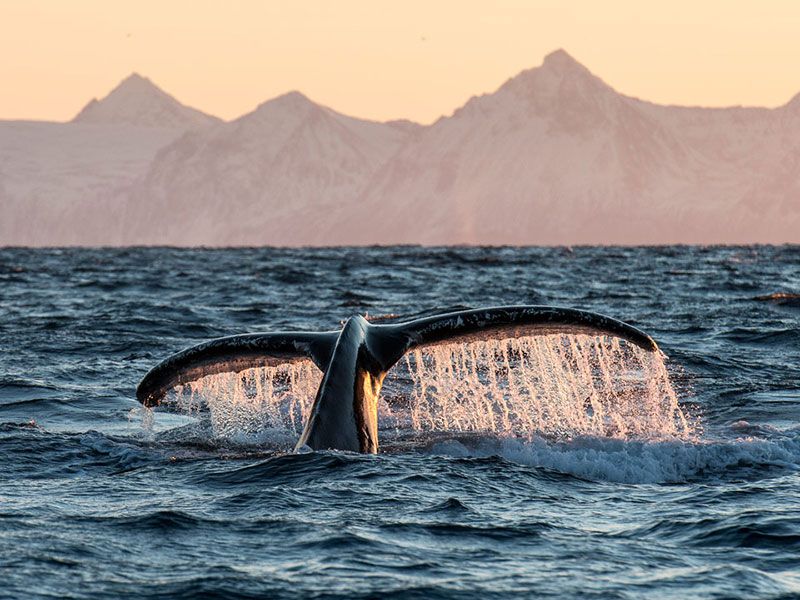
Where to see whales in Norway depends on the species and season, but Andenes in Vesterålen delivers the most consistent access to sperm whales throughout the year due to the nearby continental shelf drop-off. The Whale Safari center at Hamnegata 1C, 8480 Andenes operates daily from 08:00 to 21:00, with an exhibition admission of 150 NOK. Arriving between 08:00 and 10:00 positions you for morning departures before potential afternoon weather shifts.
The continental shelf off Andenes drops to over 1,000 meters within a few nautical miles of shore, creating one of Europe's most concentrated feeding grounds for deep-diving cetaceans. Sperm whales follow squid populations along this underwater canyon year-round, making the waters north of Vesterålen archipelago the most predictable location for whale watching in Norway. The region's position above the Arctic Circle means seasonal light dramatically alters the experience. Summer expeditions from May through August benefit from midnight sun conditions, extending potential viewing windows and allowing clearer surface observations. Winter sailings from November through February operate under polar night or twilight, with orcas and humpbacks joining resident sperm whales as herring migrations pull them into coastal fjords. Spring and autumn shoulder seasons balance daylight hours with lower visitor volumes. Andenes functions as the operational hub, with the Whale Safari facility housing educational exhibits on cetacean biology, historical whaling industry context, and current marine research projects. The guided exhibition covers baleen versus toothed whale anatomy, echolocation mechanics, and migration pattern data collected from tagged individuals. Most multi-hour boat expeditions depart from the harbor adjacent to the center, traveling northwest toward the shelf edge where sperm whales surface between deep foraging dives that can last 45 minutes. Norway whale watching operates under strict distance regulations enforced by the Norwegian Environment Agency—vessels must maintain 100 meters from cetaceans and cannot pursue animals showing avoidance behavior. These rules mean sightings depend on whale movements rather than aggressive positioning, and expeditions occasionally return without encounters despite high historical success rates. The Andenes base also serves research crews studying sperm whale social structures and vocalizations, occasionally allowing visitors to observe data collection methods during regular tours.
“The continental shelf drops to over 1,000 meters within a few nautical miles of Andenes, creating one of Europe's most concentrated cetacean feeding grounds.”
The Best Time and Seasonal Windows for Where to See Whales in Norway
The prime window for whale sightings in Andenes typically falls between late May and September, depending on species migration patterns. Arriving during the best arrival window of 08:00–10:00 is essential for aligning with morning departures and navigating potential afternoon weather shifts.
Late May to August
Moderate to highVariable, 8°C to 14°C
Summer provides consistent daylight and access to sperm whales.
September to October
LowCooler, 3°C to 9°C
Autumn months offer calmer seas but shorter daylight hours.
08:00–10:00 Daily
Lowest—
This window provides the highest probability of securing a departure before afternoon weather develops.
Verdict: For the most reliable conditions, aim for a weekday morning arrival between 08:00–10:00 during the core season of June through August.
Opening Hours for Where to See Whales in Norway at the Andenes Facility
The facility is open daily to assist with your whale watching inquiries and exhibition visits. Please refer to the weekly schedule below when planning your visit to the Andenes location.
| Monday | 08:00–21:00 | |
|---|---|---|
| Tuesday | 08:00–21:00 | |
| Wednesday | 08:00–21:00 | |
| Thursday | 08:00–21:00 | |
| Friday | 08:00–21:00 | |
| Saturday | 08:00–21:00 | |
| Sunday | 08:00–21:00 |
Getting to the Hub for Where to See Whales in Norway
The primary whale watching hub is located at Hamnegata 1C, 8480 Andenes, Norway. Travelers typically reach this coastal town via regional bus connections or by driving along the scenic route 82.
Line 300 from Sortland to Andenes
Route 82 north to Andenes
Ferry from Gryllefjord to Andenes
Pre-Visit Checklist for Where to See Whales in Norway
Prepare for your whale watching trip with these essential steps to ensure a smooth experience on the water.
-
Confirm your booking and departure time — Tours leave from Andenes harbor; verify your slot to avoid missing the boat.
-
Dress in warm, windproof layers — Arctic waters bring cold winds even in summer; thermal base layers and waterproof outer shells are essential.
-
Pack motion sickness medication if prone — Open-ocean conditions can be rough; take tablets 30 minutes before departure.
-
Bring binoculars and a camera with zoom — Whales surface at varying distances; optical zoom captures details your phone cannot.
-
Wear non-slip, closed-toe footwear — Boat decks get wet and slippery; sturdy shoes with grip prevent falls.
-
Arrive during the 08:00–10:00 window — Morning departures align with whale activity and calmer sea conditions.
-
Carry your booking confirmation (digital or printed) — The crew needs to verify your reservation before boarding.
Check availability
Frequently asked questions about where to see whales in norway
Everything you need to know about where to see whales in norway