9 hr
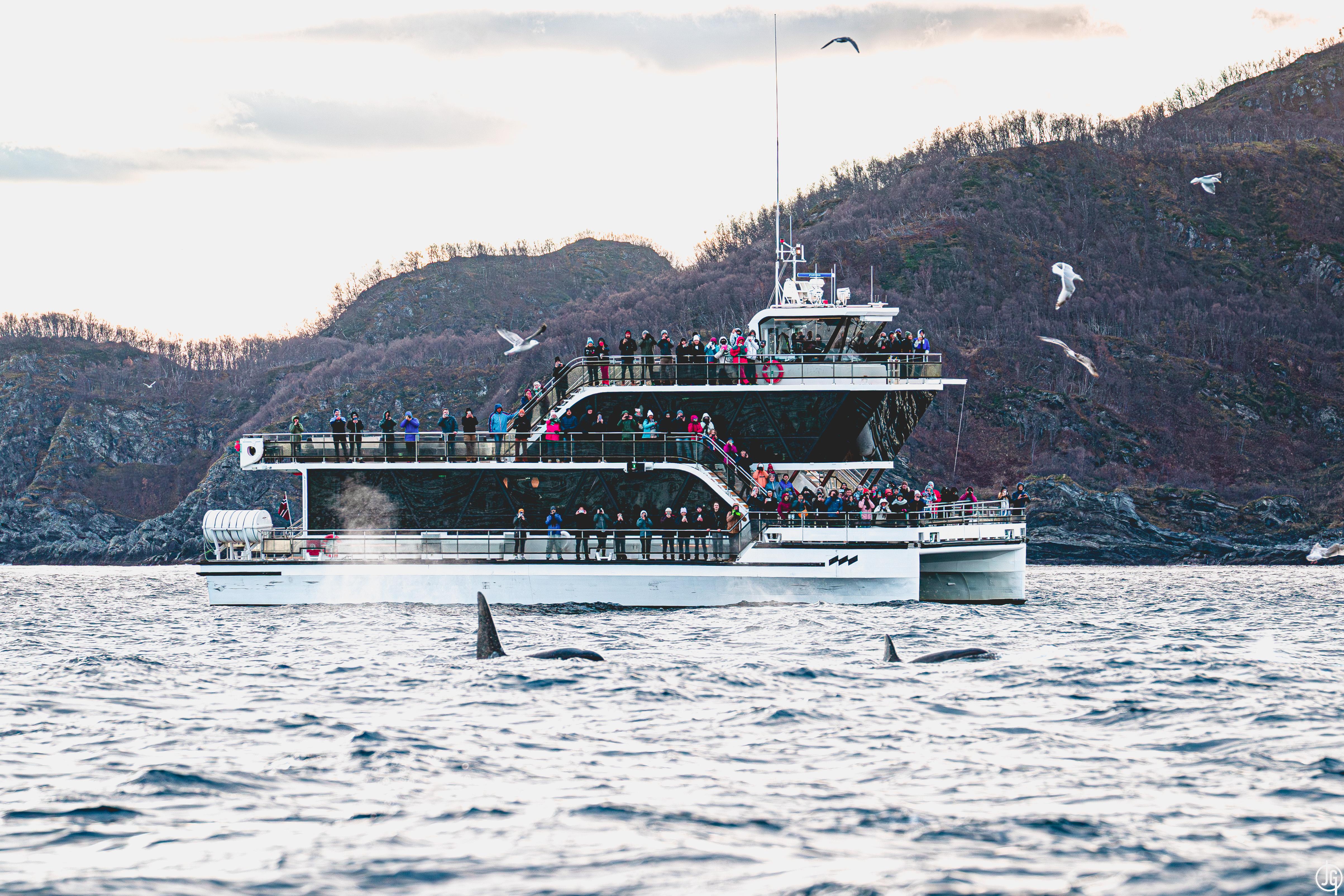
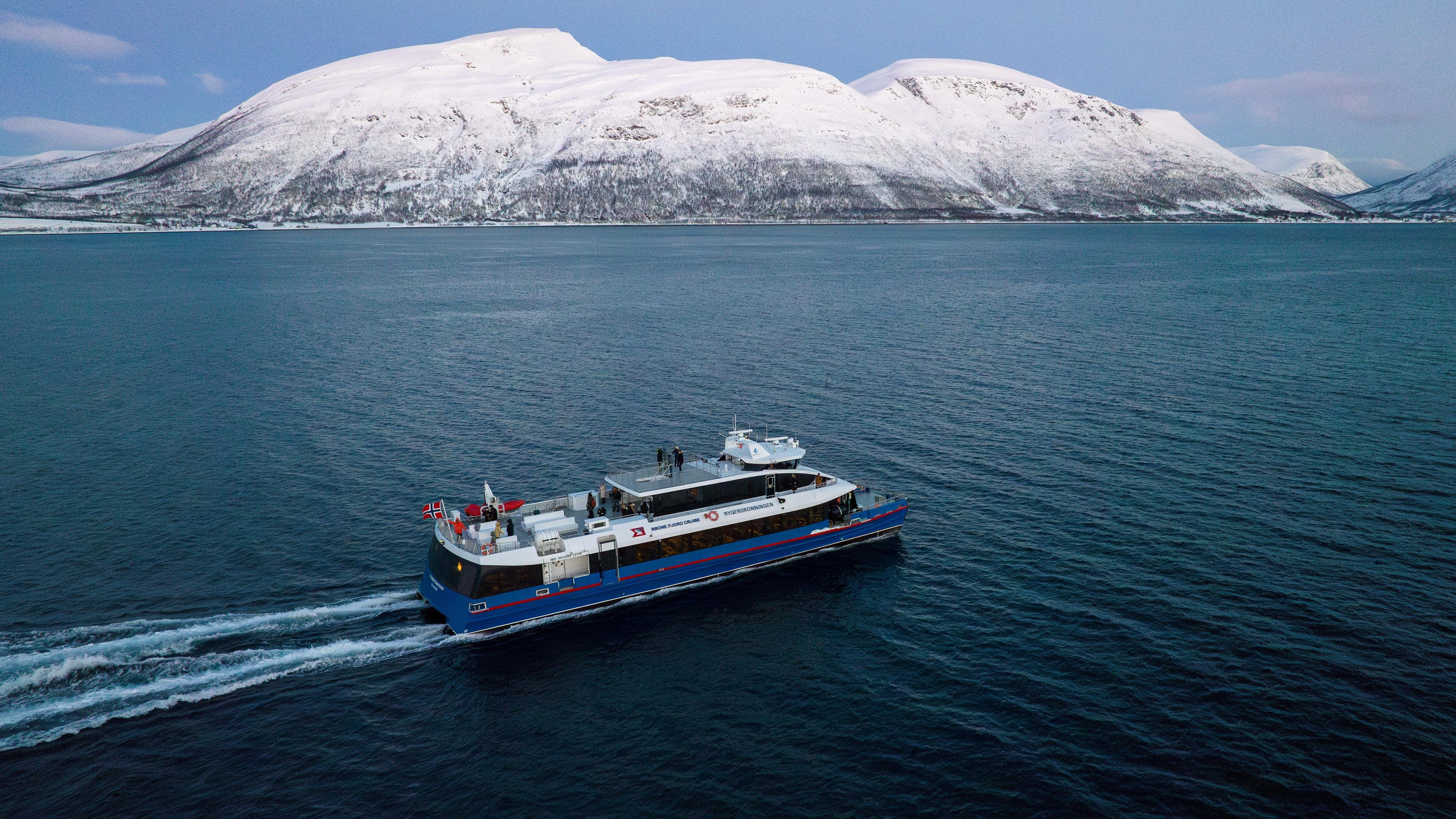
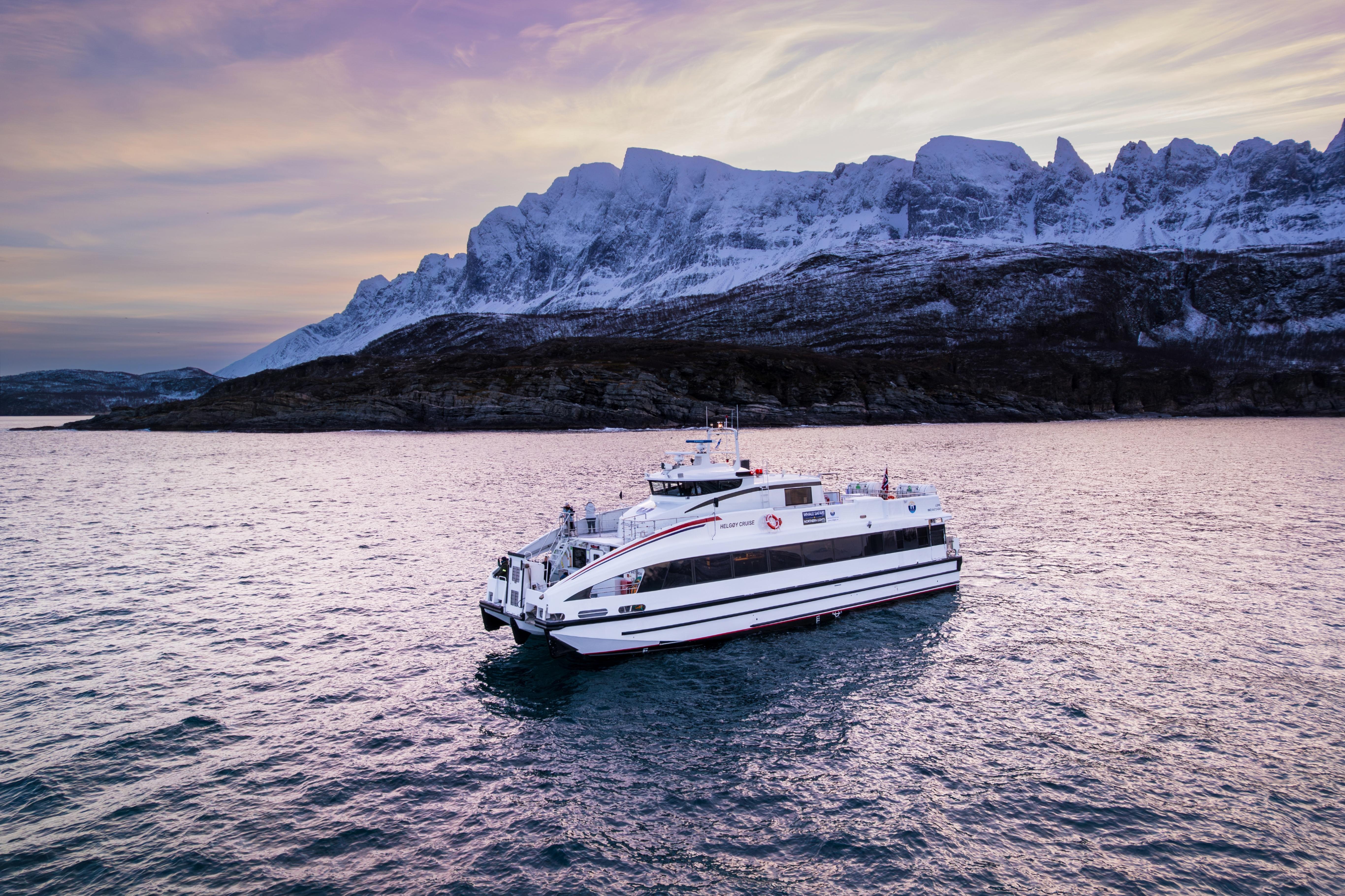
Arctic Whale Watching aboard Hybrid-Electric Catamaran
- Expert local guide
- Small group
- Skip-the-line access
- Free cancellation
Norway Whale Watching Tromso — Arctic Safari & Orca Expeditions
Humpback, orca, and fin whales in polar waters, aboard hybrid catamarans and high-speed RIBs
Compare fares, pick the fit — all bookings are mobile-voucher and eligible for free cancellation where shown.
9 hr
8 hr
12 hr
Choosing the right excursion for norway whale watching tromso depends on your preference for vessel size and onboard amenities. These curated norway whale watching tromso tours operate from Nerstrandakaia, providing access to the arctic fjords where marine mammals are frequently spotted.
|
Top pick Silent Electric Cruise Sustainable silent access |
Traditional Polar Vessel Classic explorer ship | |
|---|---|---|
| Vessel Type | Electric catamaran | Diesel-powered boat |
| Observation Deck | Multi-level panoramic decks | Main deck and interior lounge |
| Group Size | Small group | Large group |
| Indoor Comfort | Climate-controlled cabin | Heated indoor seating |
| Onboard Amenities | Cafe and research tools | Snack bar and restrooms |
| Best for | Environmentally conscious travelers | Group outings |
| See tickets & prices |
Verdict: Select the silent electric cruise for a modern, low-impact experience, or book traditional norway whale watching tromso tickets if you prefer a classic maritime expedition.
Worth it for wildlife seekers and Arctic enthusiasts
Norway whale watching Tromso delivers genuine value when you account for what's included in the expedition cost. Most tours bundle thermal suits, professional wildlife guides trained in cetacean behavior, and multi-hour journeys into fjord feeding grounds where humpback whales and orcas congregate during migration seasons. The hybrid-electric catamaran and RIB boat options both prioritize sighting success, with operators adjusting routes based on real-time spotter networks tracking whale pods. You're paying for specialized equipment—hydrophones to locate vocalizations, stable viewing platforms, and safety gear rated for Arctic conditions. The Skjervøy RIB safari adds speed to reach remote feeding areas faster, while standard catamarans offer heated cabins for extended comfort. Sighting rates hover around 85-90% during peak months, though no operator guarantees encounters with wild animals. For photographers and marine life enthusiasts, the expertise of naturalist guides who explain feeding patterns and pod dynamics adds educational depth beyond a simple boat ride. Casual tourists expecting guaranteed close encounters may find the investment steep if whales remain distant.
Bottom line: The norway whale watching tromso tours justify their cost through specialized access, expert guidance, and strong sighting probabilities in one of Europe's premier cetacean habitats.
Large vessels provide stability and indoor amenities for those prioritizing comfort, whereas RIB boats offer an agile experience for enthusiasts seeking a closer perspective during their norway whale watching tromso tours. Choosing between the two depends on whether you prefer the convenience of an observation deck or the excitement of high-speed marine transit.
|
Top pick Large Vessel |
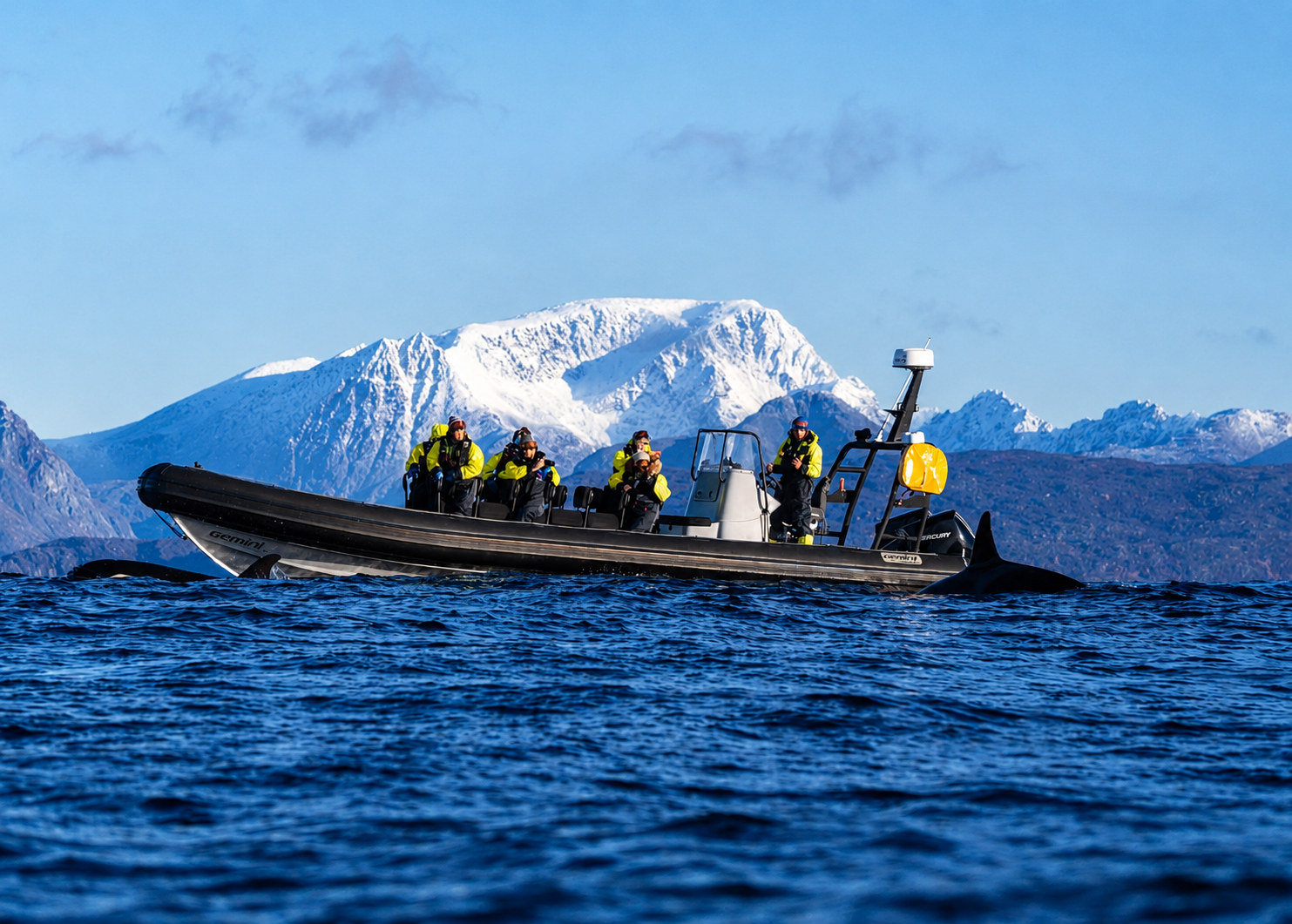
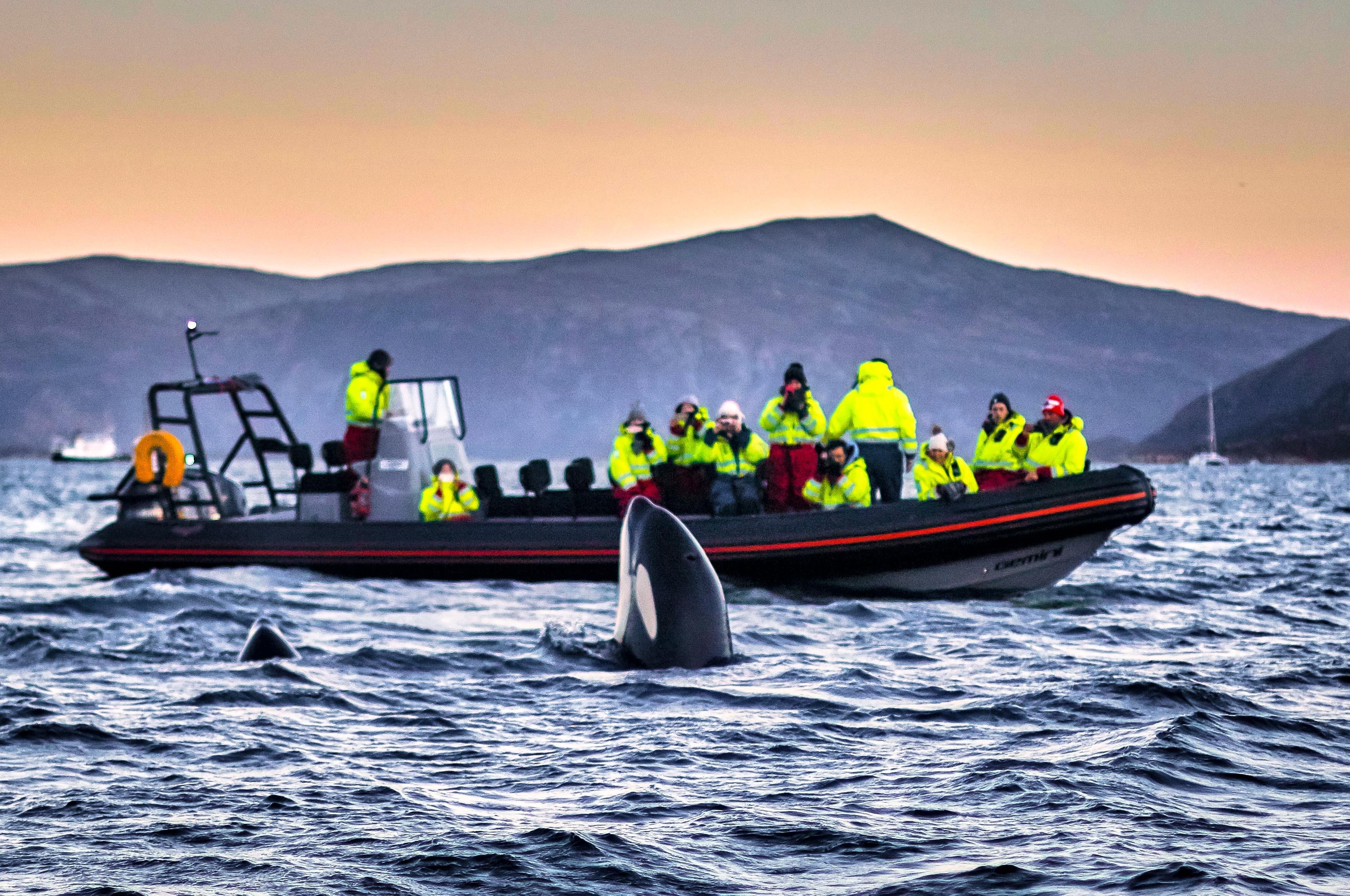
RIB Boat | |
|---|---|---|
| Speed and agility | Moderate cruise speed | High speed and maneuverability |
| Onboard comfort and seating | Indoor lounge with seating | Exposed bench seating |
| Proximity to water level | High elevation viewing | Low to water level |
| Access to onboard bathrooms | Available on board | None available |
| Group size | Typically 30 to 100 people | Typically 10 to 15 people |
| See tickets & prices |
Verdict: Select the large vessel for a relaxed norway whale watching tromso trip with climate control, or opt for the RIB for a fast-paced excursion requiring norway whale watching tromso tickets that prioritize wildlife proximity.
Hand-picked experiences loved by thousands of travelers
12 hours
Free Cancellation
Witness orcas and humpback whales feeding in Arctic fjords during this full-day winter expedition
8 hours
Free Cancellation
Set sail on an intimate marine wildlife adventure with a family-run operator in Norway's Arctic waters.
7.5 hours
Free Cancellation
Search for humpback whales and orcas aboard a swift catamaran through Arctic fjords and dramatic winter scenery
6 to 8 hours
Free Cancellation
Venture into Norwegian waters to observe orcas and humpback whales hunting herring in their wild habitat
8 hours
Free Cancellation
Eight-hour Arctic voyage seeking orcas and humpbacks in Norwegian fjords with expert guides
12 hours
Free Cancellation
Full-day heated boat expedition to observe orcas and humpback whales in Norway's Arctic waters
24 hours
Free Cancellation
Sleep at sea aboard a small expedition ship and chase the Aurora while spending extended time with Arctic whales
3 to 12 hours
Free Cancellation
Hunt for orcas and humpbacks aboard a rigid inflatable boat in Norway's stunning northern fjords
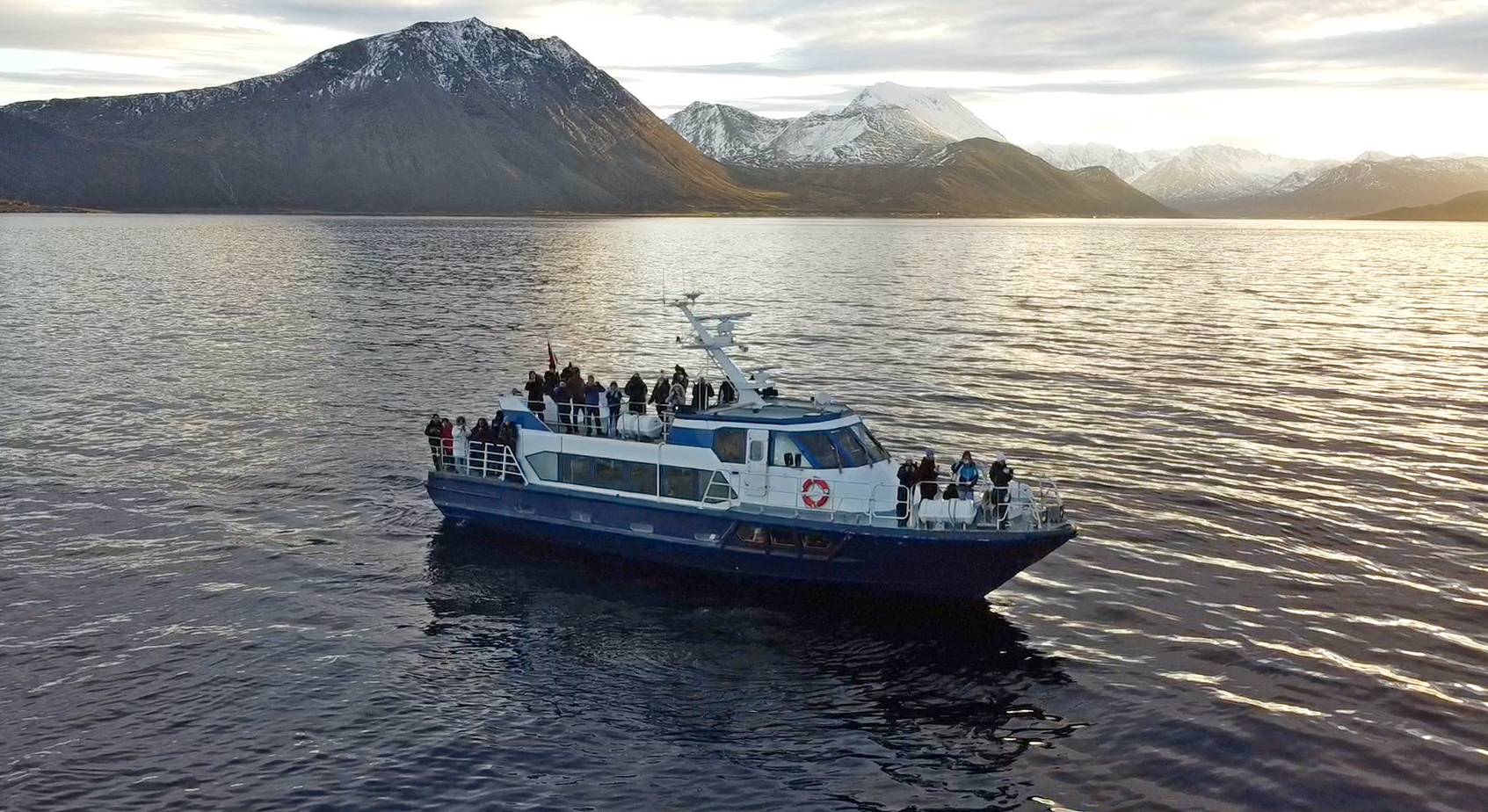
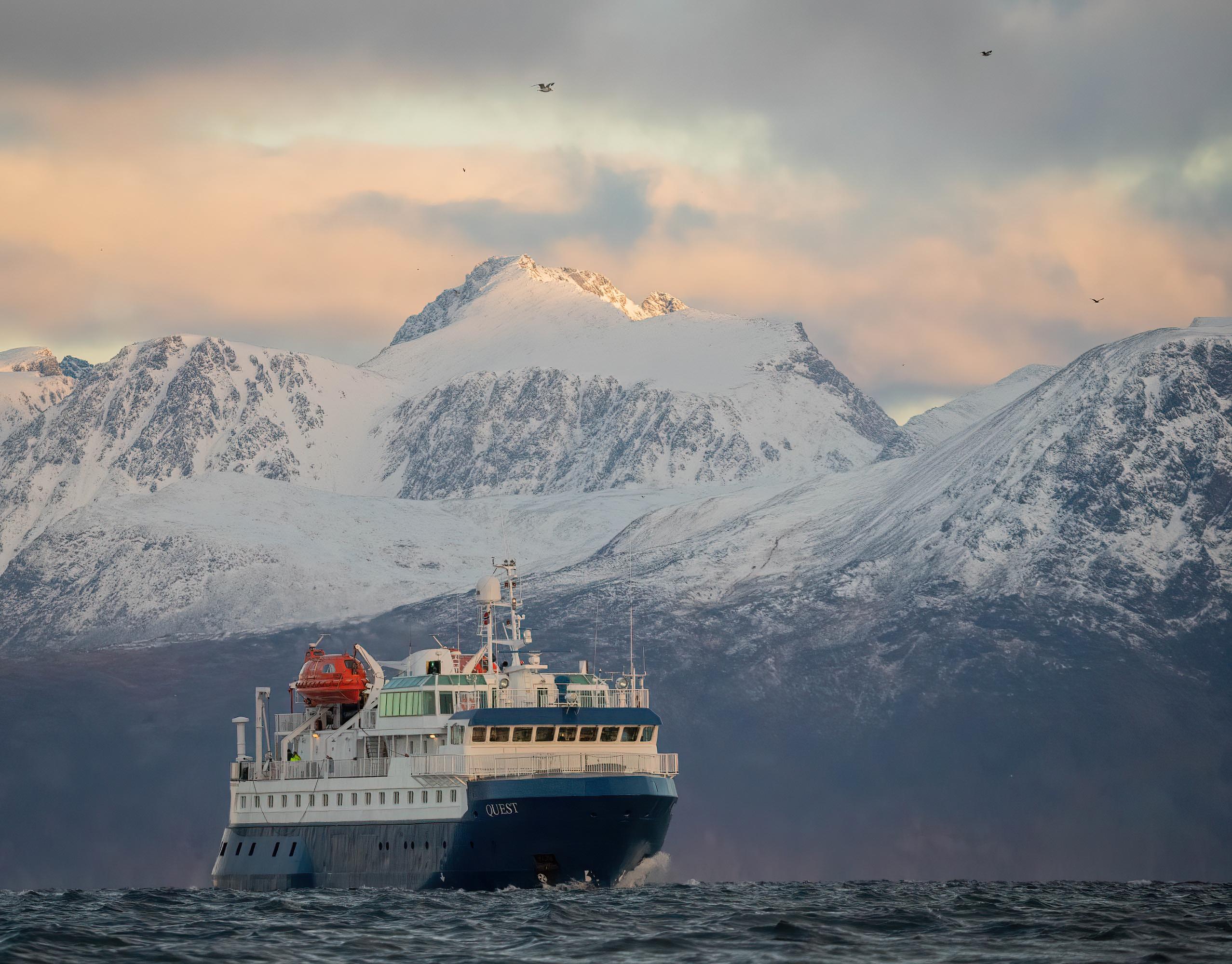
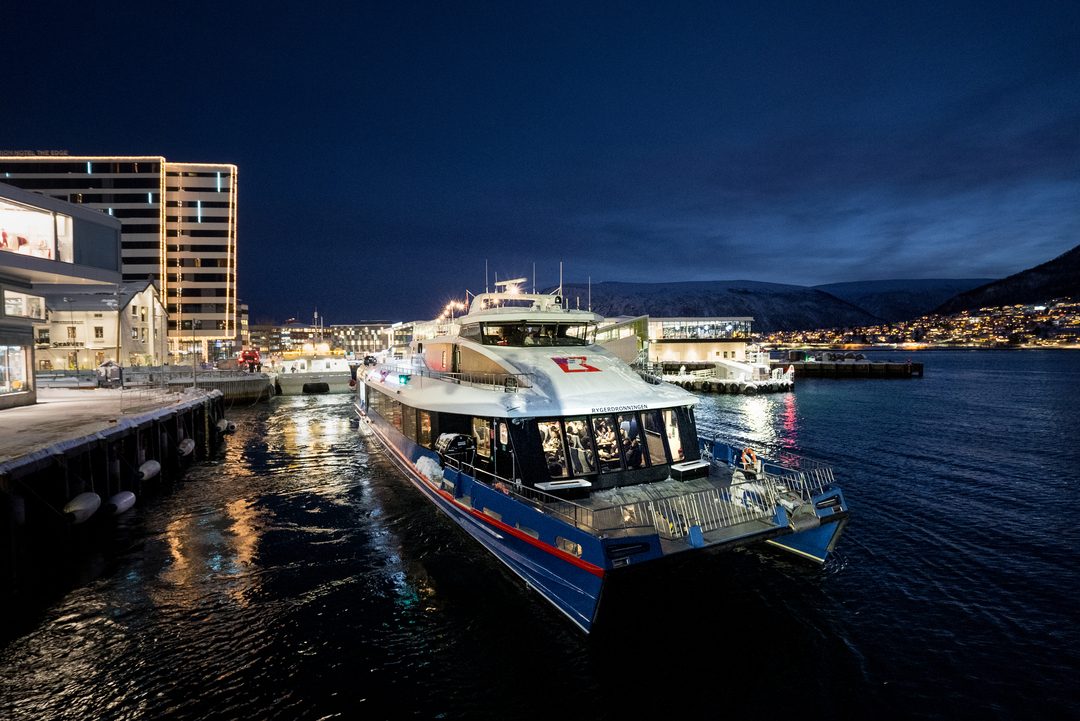
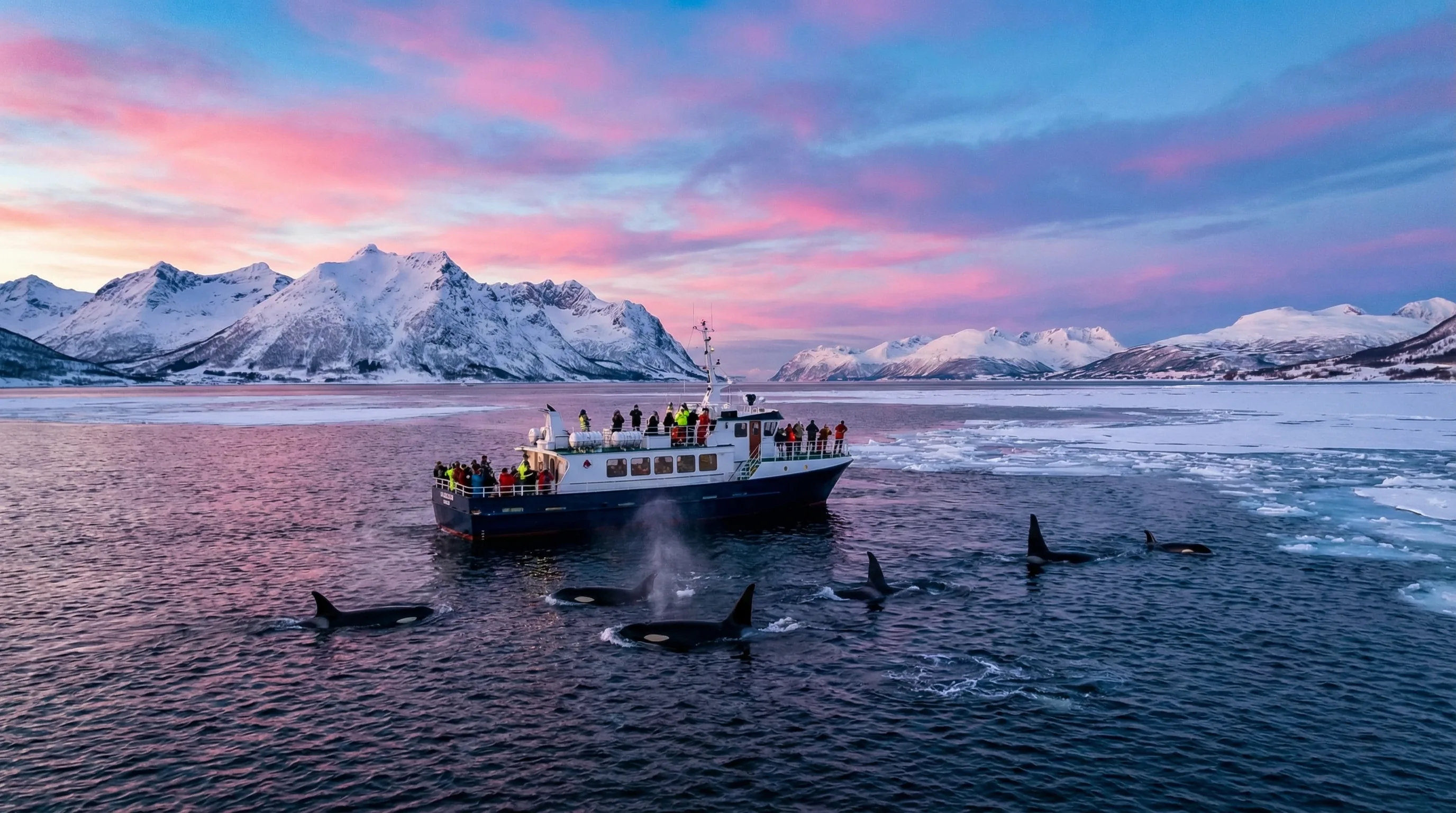
You board at Nerstrandakaia as deck crew distribute thermal suits and insulated gloves, the catamaran's twin hulls stable even as wind gusts cross the harbor. The vessel clears the breakwater and turns north, Tromsø's lights shrinking behind you as the captain throttles up to cruising speed.
The first hour passes through empty water, the only motion the rhythmic slap of waves against composite hulls. Crew members brief you on hand signals and camera settings while the galley serves coffee in steel thermoses.
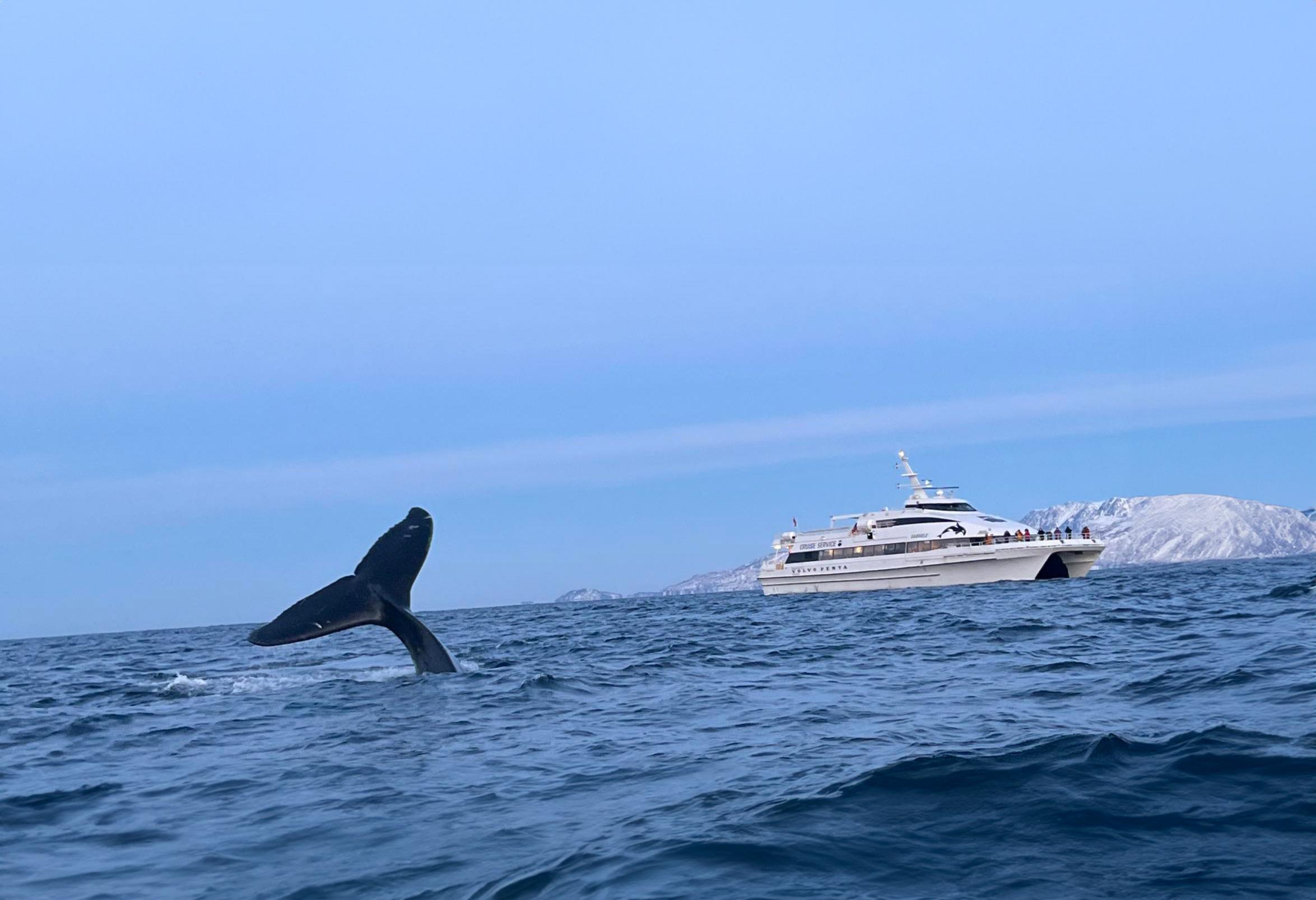
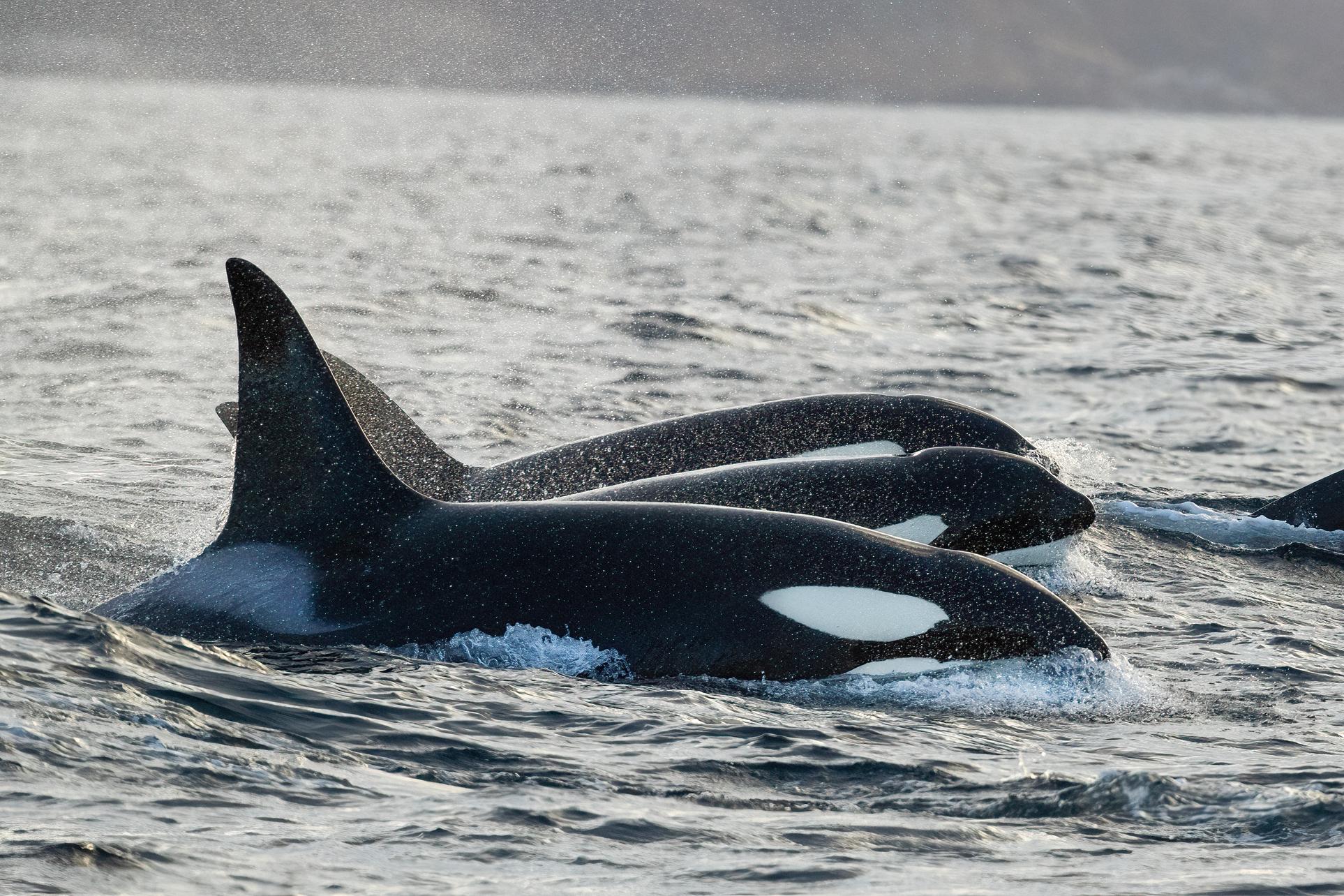
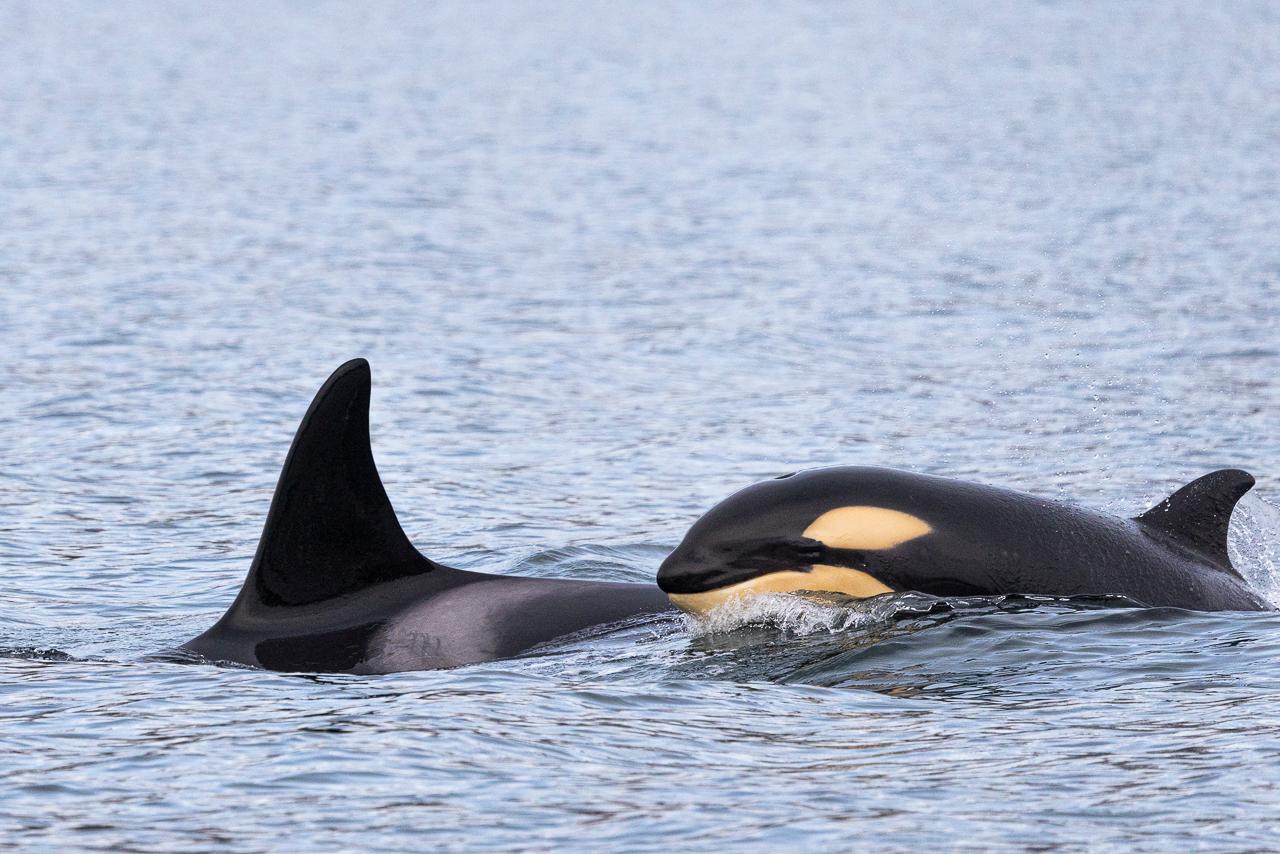
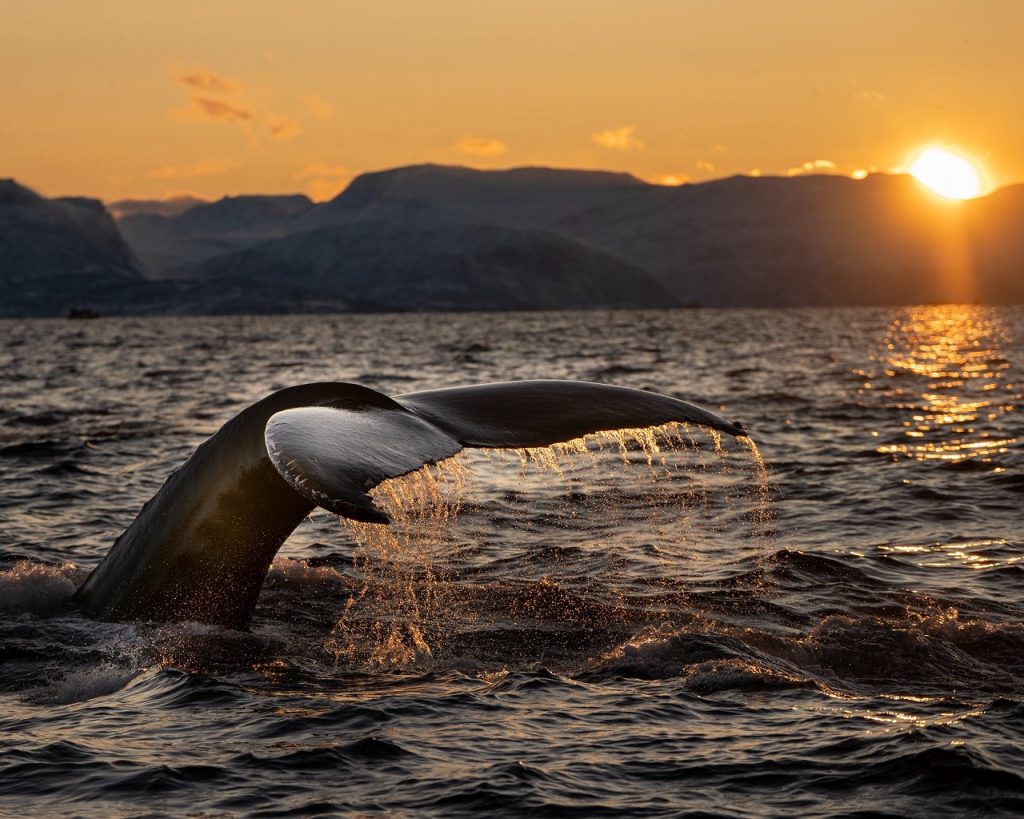
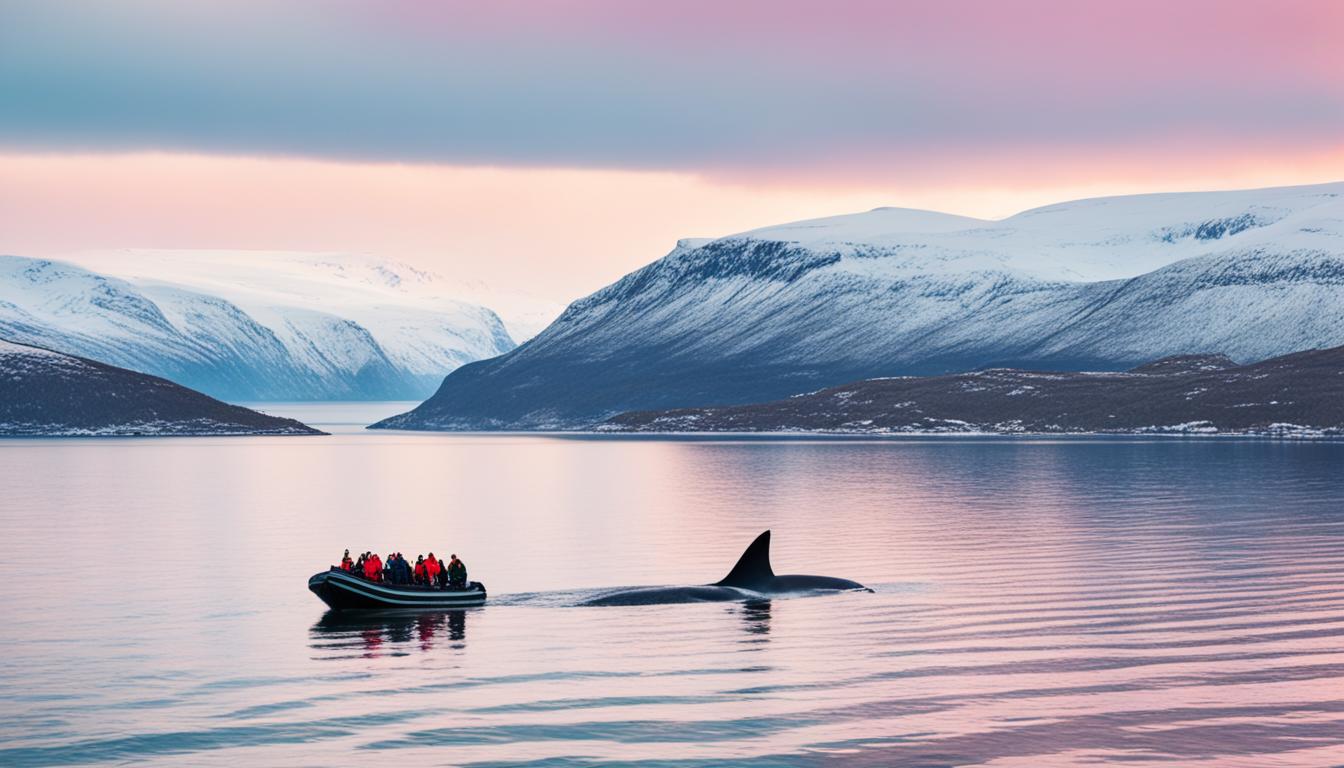
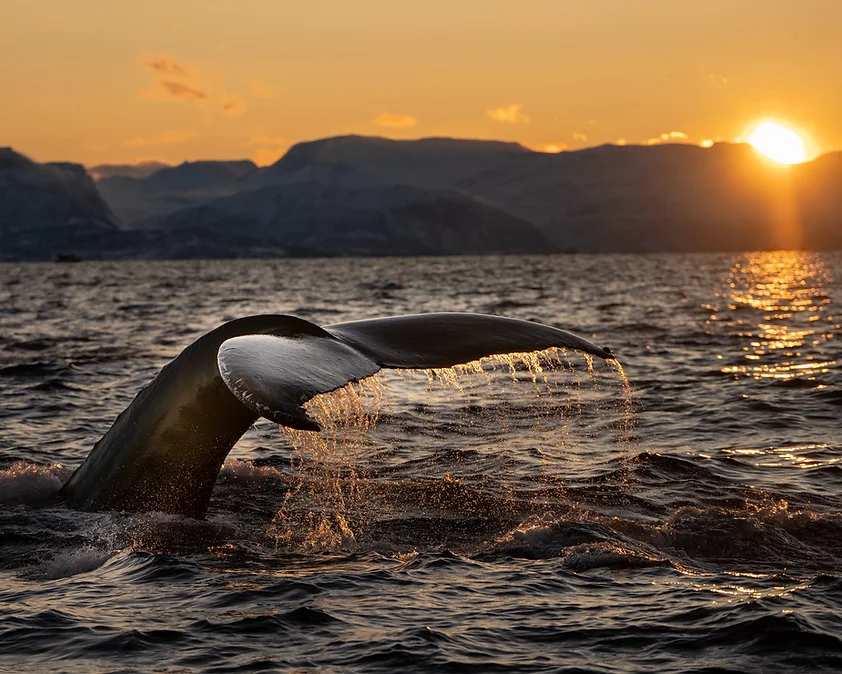
Two hours out, the radio crackles with Norwegian and the engines cut to idle. You move to the foredeck as a humpback surfaces thirty meters off the starboard bow, its blow visible as a vertical mist column before the animal arcs and sounds. The dorsal fin slides under and you count seconds until the tail flukes lift clear, shedding seawater, then slip vertically downward. The whale is hunting, and you wait in silence. Three more humpbacks surface in sequence, their blows synchronized, then an orca pod cuts across the bow wave, dorsals slicing the surface in formation. You photograph the saddle patches as crew members call out identifications, matching individuals to a photobook kept in the wheelhouse. The light never brightens beyond twilight, but the contrast is enough. You watch until the cold drives you below for the return transit.
All the details about your upcoming adventure in one place
Between November and January each year, herring migrate into the fjords surrounding Tromsø in such density that humpback whales, orcas, and fin whales follow in their hundreds, creating the largest seasonal congregation of cetaceans in coastal Europe.
The phenomenon transforms the waters off Skjervøy and the outer reaches of Kvænangen into a natural amphitheater where apex predators cooperate, compete, and feed within meters of small vessels. Scientific tagging programs conducted since 2014 have identified individual humpbacks returning to these exact coordinates across consecutive winters, suggesting learned migration routes passed between generations.
Norway whale watching Tromso operations depart from Nerstrandakaia, the working harbor that serves both commercial fisheries and tourist craft. Hybrid-electric catamarans now dominate the fleet, their silent propulsion systems allowing close approaches without disturbing feeding behavior. High-speed RIB options reach Skjervøy in under two hours, extending the observation window in distant fjords where whale density peaks. Each departure requires a three-hour minimum transit to productive waters, with sightings concentrated in the narrow straits where tidal currents compress baitfish into tight columns. Captains communicate via VHF radio, sharing coordinates when pods surface, though Norwegian maritime law mandates a 200-meter exclusion zone that operators respect rigorously.
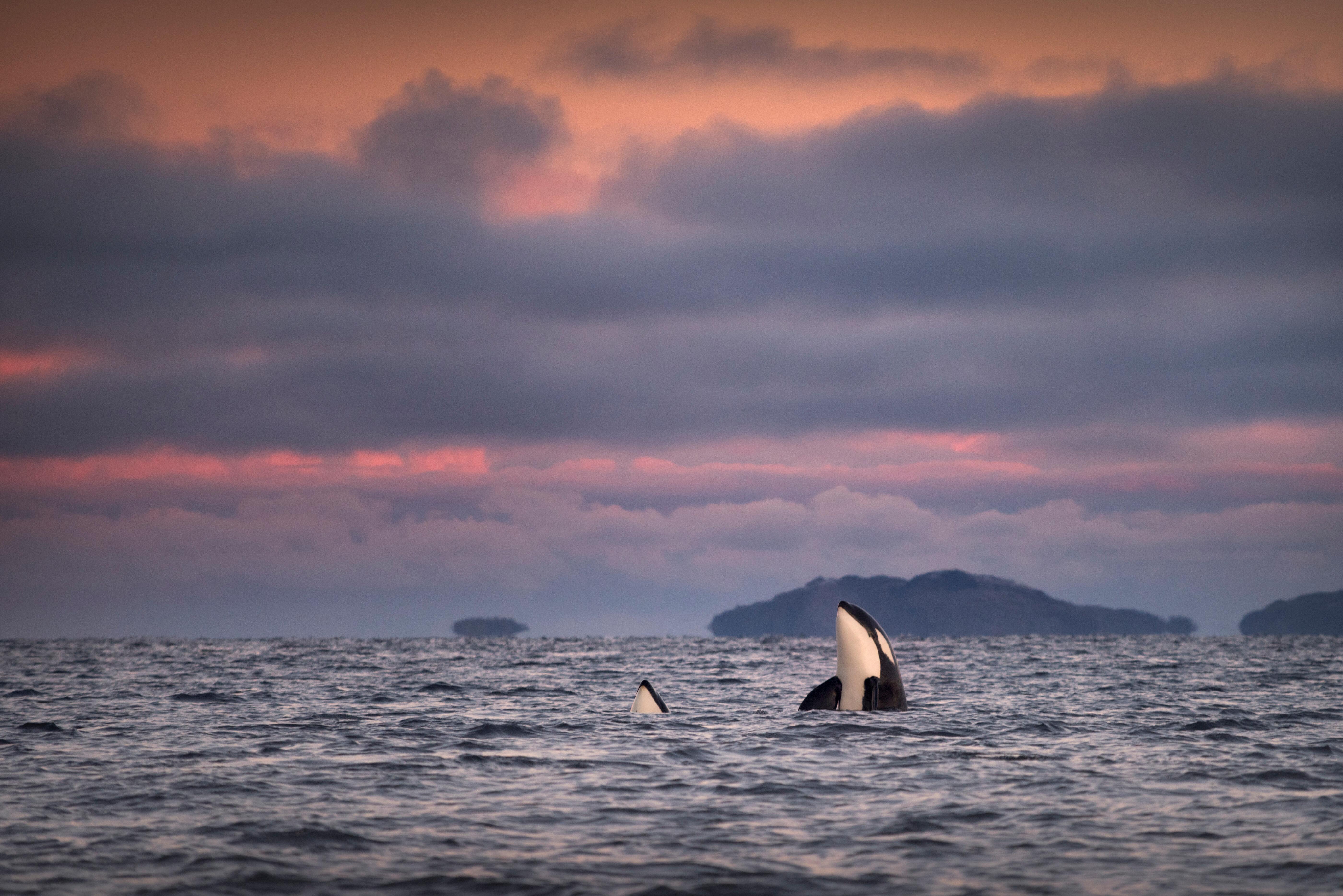
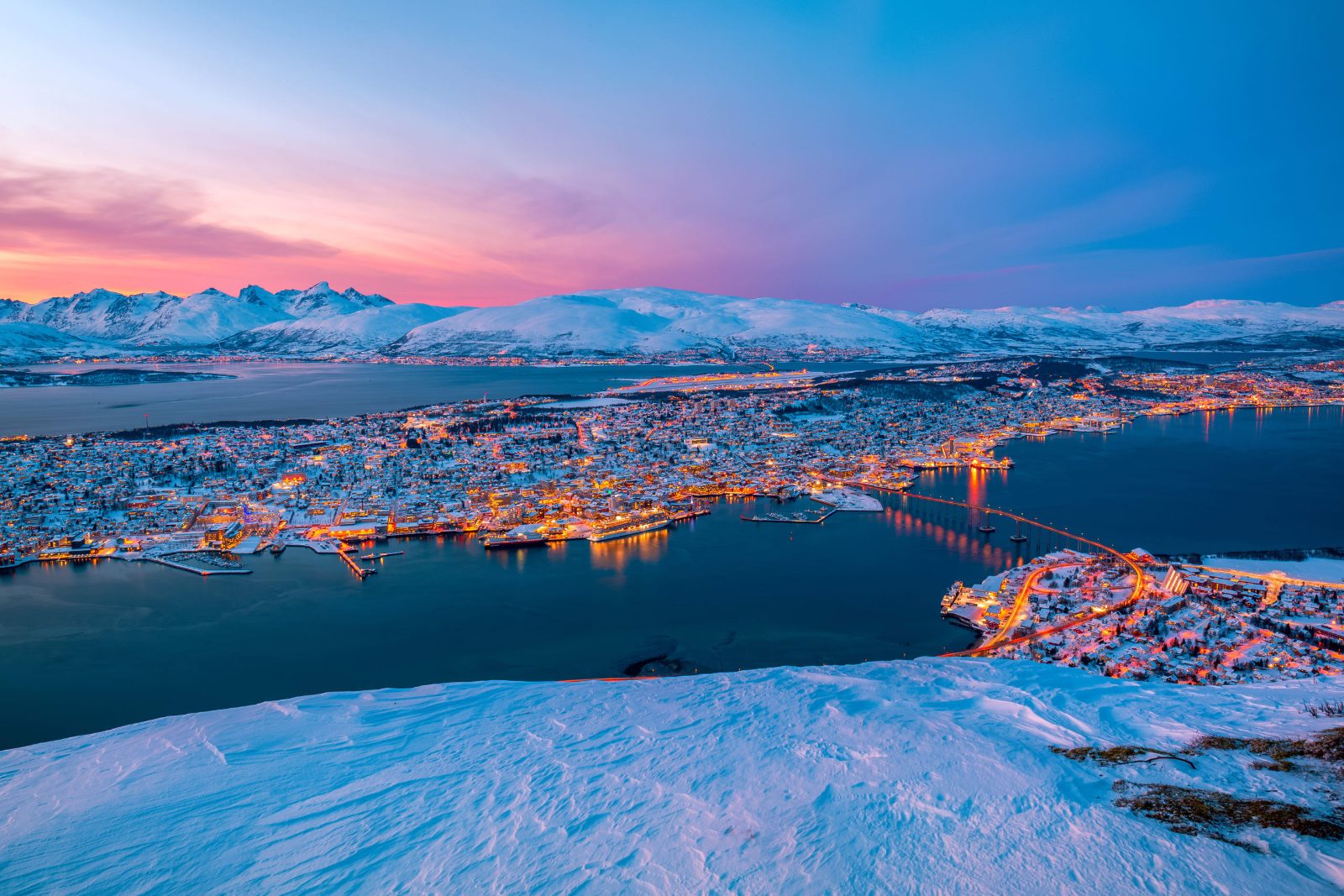
The Arctic light cycle governs every dimension of the experience. Departures align with the brief window of nautical twilight between late November and mid-January, when the sun never fully rises but the horizon glows deep blue for three hours around midday. Orcas breach against this gradient, their dorsals black against cobalt, while humpback tail flukes catch the last horizontal rays. Photographers favor the muted palette and the long shadows cast across the water. By February the herring disperse and the whales follow, leaving the fjords silent until the next winter.
Tromsø's position at 69 degrees north places it squarely within the range of both resident and migratory cetacean populations, but the phenomenon depends entirely on herring behavior, itself driven by water temperature and plankton blooms. seasons when the herring shift south see operators running empty boats or pivoting to sea eagle and seal observation as secondary offerings.

Scientific tagging programs have identified individual humpbacks returning to these exact coordinates across consecutive winters.
Dress in multiple warm, wool-based layers to withstand Arctic winds. A windproof and waterproof outer jacket, warm hat, mittens, and insulated footwear are essential for norway whale watching tromso.
Space on board is limited; only bring small daypacks. Security protocols are at the discretion of the vessel operator and may include boarding checks at Nerstrandakaia.
Bring extra batteries as cold weather drains power quickly. Use a waterproof cover for your gear to protect it from sea spray during your norway whale watching tromso tour.
Children are welcome on most larger vessels, though some fast-paced RIB operators have age restrictions. Check specific tour age policies before booking for the family.
Some vessels offer step-free access and toilets, but many RIB boats are not suitable for guests with limited mobility. Always verify accessibility directly when buying your norway whale watching tromso tickets.
Most operators sell hot drinks and snacks on board, but guests are generally welcome to bring their own refreshments. Consume food in designated indoor lounge areas to keep decks clear.
Best arrival window
08:30–09:00
Address
Nerstrandakaia, 9008 Tromsø, Norway
Physical access
Tours vary by vessel; check operator specs
Peak Season
October to January
Storage
Minimal space on boats; pack light
Official site
https://www.visittromso.no
Cancellations must be made within the operator-specified window to qualify for a refund. Entrance fee is 0 NOK as tours are sold as individual packages by private operators.
Recommended time
6-8 hours
Most excursions require a full day due to the transit time from Nerstrandakaia to feeding grounds, often including a bus transfer to Skjervøy. Planning your norway whale watching tromso full-day itinerary involves preparing for extended periods on the water, where maritime conditions and wind chill can impact energy levels. Booking norway whale watching tromso tours in advance ensures your spot, as norway whale watching tromso tickets often sell out during peak sea safari hours. These marine mammal observation expeditions typically feature a high-intensity departure period followed by a long, focused search at sea.
Crowd levels through the day
Commercial whale watching emerged in Tromsø during the late 1980s when Norwegian biologists tracking orca and humpback populations along the northern coast recognized the tourism potential of predictable herring-driven migrations. The first organized norway whale watching tromso excursions launched in 1989, operating from small fishing vessels repurposed during winter months when traditional catches declined. These early operators relied on radio networks shared with local fishermen to locate feeding pods in the fjords surrounding Skjervøy and Reisafjorden, often departing with fewer than six passengers per trip. The industry transformed after 1995 when mass herring migrations shifted permanently into Kvænangen and surrounding waters, concentrating orca super-pods within three hours of Tromsø harbor. Purpose-built safari catamarans replaced fishing boats by 1998, and the number of licensed operators grew from three to seventeen within five years. A near-collapse occurred in 2003 when herring stocks abruptly migrated east toward Finnmark, stranding operators with empty winter schedules and forcing half to abandon whale-focused itineraries. The crisis resolved by 2006 as humpback whale populations increased along the continental shelf, providing alternative sightings even when orca followed herring beyond practical range. Modern norway whale watching tromso tours consolidated around Nerstrandakaia in 2011 when the harbor expanded its safari berthing capacity and introduced standardized departure protocols. Hybrid electric vessels entered service in 2019, reducing noise pollution in critical feeding zones. Operators now coordinate through a shared sighting network that includes research vessels from the Norwegian Institute of Marine Research, achieving encounter rates above eighty-five percent during the November-to-January peak season. The Tromsø model influenced whale safari development across Arctic Norway, establishing protocols for minimum approach distances and seasonal zone restrictions that became national policy in 2024.
First commercial whale watching excursions depart from Tromsø using repurposed fishing vessels.
Herring migrations concentrate orca super-pods within three hours of Tromsø harbor.
Purpose-built safari catamarans replace fishing boats as operator numbers expand to seventeen.
Herring migration shifts east toward Finnmark, forcing half of operators to abandon whale itineraries.
Increased humpback populations stabilize the industry after the herring-driven crisis.
Safari operations consolidate at Nerstrandakaia as harbor expands berthing capacity.
Hybrid electric vessels enter service to reduce acoustic disturbance in feeding zones.
Tromsø approach protocols become national policy for Arctic whale watching operations.
Position yourself at the edge of the dock for clear views of the fjord and departing vessels as you prepare for your norway whale watching tromso excursion.
This elevated vantage point provides a wide angle of the Arctic waters and the mountainous horizon, ideal for capturing the scale of the landscape.
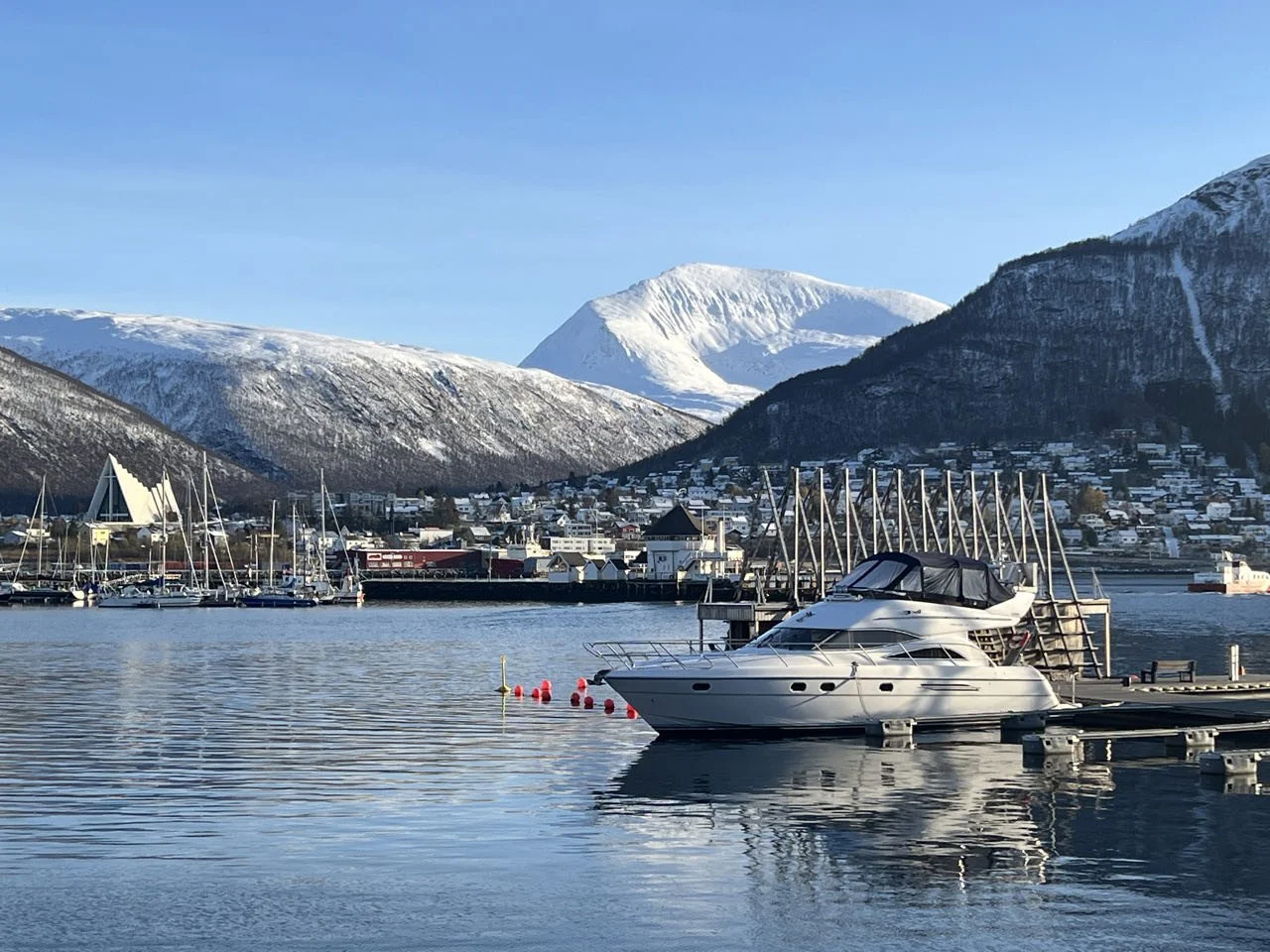
Capture the reflection of the surrounding peaks and the fleet of boats from the waterline, offering a low perspective of the marine environment.
Planning norway whale watching tromso trips with children requires careful selection of vessel types to match your family's comfort level. These arctic marine excursions offer a unique perspective on the fjords while prioritizing safety for younger travelers.
Choose larger catamarans over RIB boats for families with young children, as they provide indoor cabins, restrooms, and stability in open water.
Many operators suggest a minimum age of 4–6 years for longer sea voyages; always check specific norway whale watching tromso tours policies before booking.
Bring binoculars and download wildlife identification charts to keep children occupied during the search for marine mammals in the arctic waters.
Arrive at Nerstrandakaia, 9008 Tromsø, Norway between 08:30–09:00 to ensure a calm boarding process before your norway whale watching tromso tickets are scanned.
While catamarans typically have basic amenities, confirm in advance if the specific boat provides hot beverages or snacks to maintain energy during the excursion.
Finding quality sustenance near norway whale watching tromso is straightforward, as the harbor area at Nerstrandakaia is surrounded by excellent local cafes that cater to early departures. Whether you are seeking norway whale watching tromso tours or simply a quick breakfast before heading to the fjords, several options provide comfort and warmth.
Offers refined Nordic dishes and a cozy atmosphere perfect for pre-trip preparation. Their morning coffee service is highly regarded for those needing a caffeine boost before picking up norway whale watching tromso tickets.
Everything you need to know for your journey
The peak season is from late October to January when herring schools attract orcas and humpbacks.
Tickets can be purchased via the official site or through private activity providers at Nerstrandakaia.
Many tours are family-friendly, though check specific age limits for high-speed RIB excursions.
Many operators offer a 'Second Chance' guarantee to join another trip for free if no sightings occur.
Most operators depart from Nerstrandakaia, 9008 Tromsø, Norway, typically starting at 08:30–09:00.
There is no entrance fee; you only pay for the individual tour package you select from the operator.
Yes, you can bring your own snacks, though most vessels offer coffee, tea, and food for purchase.
Most larger catamarans feature onboard toilets, though smaller RIB boats may not have these facilities.
Dress in heavy, windproof, and waterproof layers including gloves, a hat, and insulated boots.
Join thousands of happy travelers who have discovered this incredible experience
Book Your Experience Now